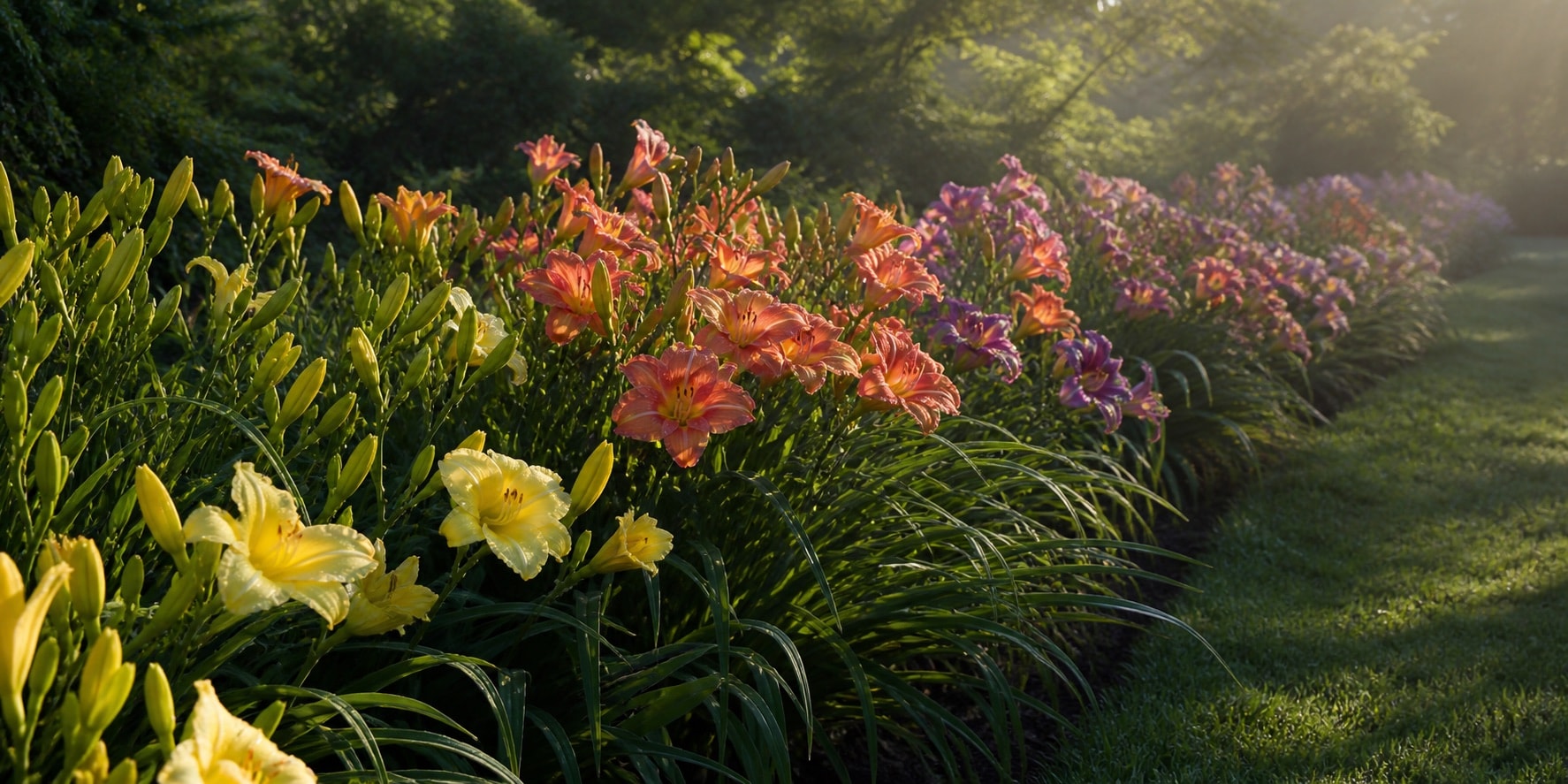
Bloom-season descriptions are useful shorthand, but they are not fixed calendar appointments. Climate, spring temperatures, elevation, exposure, moisture, establishment, and the individual cultivar all influence timing. The most dependable calendar is the one built in your own garden over several years.
Record three dates
For each clump, note the first open flower, the date or week of the strongest display, and the final flower. These three points describe the season more honestly than a single label. Add the number of active scapes at peak and a short note about weather. A heat wave, prolonged rain, or late frost may explain a shift that would otherwise look like a change in the plant.
Use the same observation route and roughly the same time of day. Because flowers are brief, an irregular schedule can miss the true first or last bloom. A quick photograph with the label in frame creates a timestamped backup, but transfer the result to a durable record.
Read the bud sequence
Scapes with useful branching and well-spaced buds often produce a longer, more legible display than a tight cluster that opens at once. Note whether branches are high or low, whether flowers interfere with one another, and whether spent blooms are easy to remove without damaging buds. This observation connects flower quality to whole-plant performance.
The genus profile from a university horticulture resource explains that each flower is brief while cultivars collectively span a broad season. Your notebook adds the local layer.
Separate rebloom from extended primary bloom
A clump may flower for a long time because several primary scapes develop in sequence. True rebloom involves additional scapes after the initial cycle. Record the gap, new scape emergence, and whether the pattern repeats in another year. Moisture and growing-season length can strongly affect the expression of rebloom, so one event should not become a guarantee.
Create a simple season band
Draw a horizontal line for the local bloom window and divide it into weeks. Place each cultivar as a bar from first to last flower, with a darker mark at peak. After two or three seasons, use the average position while retaining notes about unusual years. The visual immediately reveals gaps, overcrowded peaks, and plants whose seasons overlap consistently.
Connect bloom to design
A gap is not always a problem. Quiet green intervals can give a border rest, especially if foliage and structure remain strong. If continuous flower is a goal, add plants whose season is locally verified rather than relying only on catalog labels. Use repeated color to carry the eye across weeks even when different cultivars are in bloom.
The garden-design page turns the calendar into a border plan. The selection guide helps evaluate whether a prospective plant truly fills the missing role.
What to write beside every date
- Weather pattern during the preceding two weeks.
- Whether the clump was newly planted or recently divided.
- Approximate soil moisture and any irrigation change.
- Scape count, obvious damage, or leaning.
- Any increase in shade from nearby plants.
- Whether the date was observed directly or estimated.
This context keeps the calendar from becoming false precision. Over time, the pattern matters more than any isolated date.