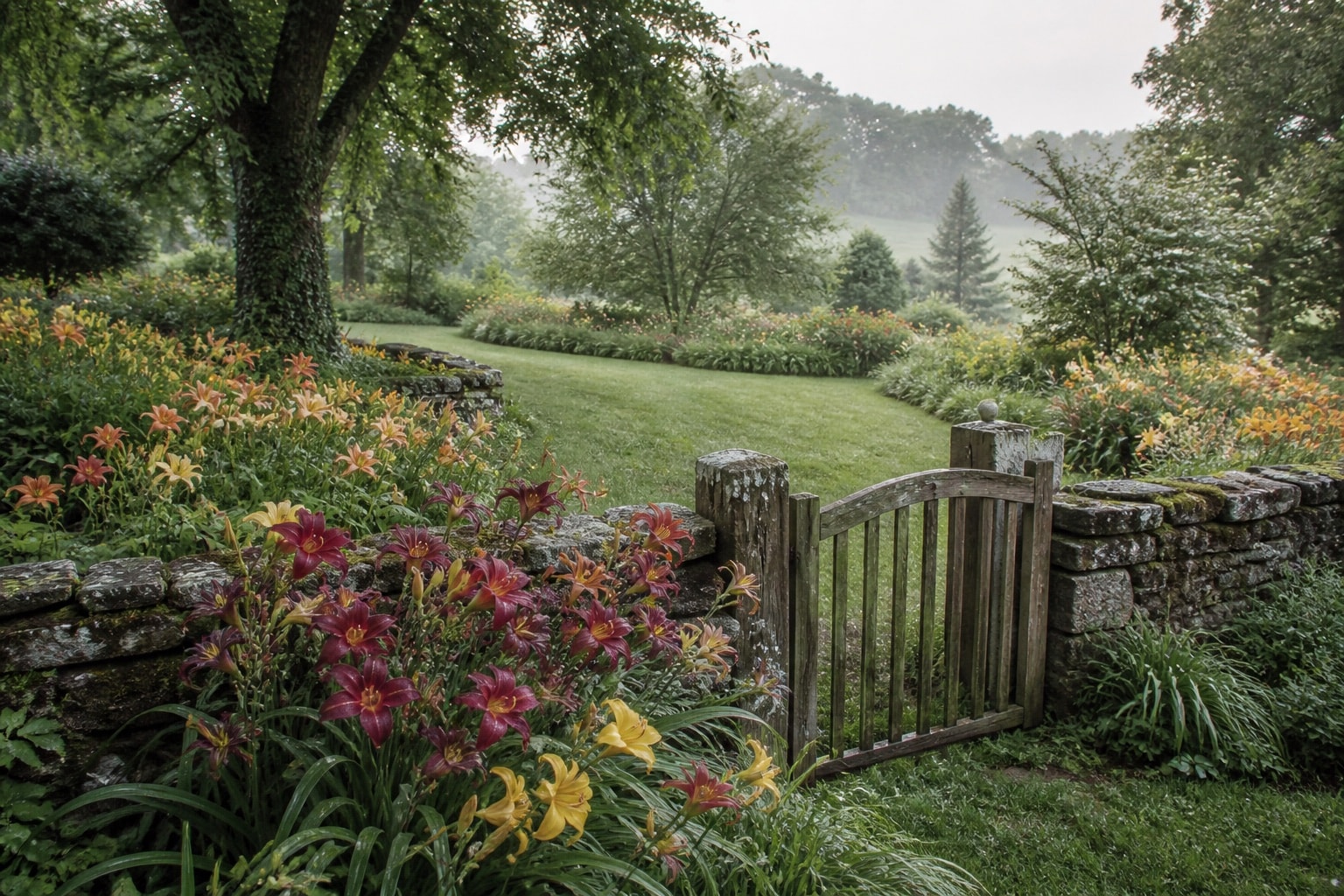
Independent directories describe a family daylily garden near Shelbyville, Kentucky: a Zone 6 grower with hundreds of older and newer cultivars. Dated third-party accounts from the 2000s and early 2010s mention mail-order divisions, seasonal garden visits, and an emphasis on healthy freshly dug plants.
This page does not speak for the garden's owners, present inventory, announce hours, invite visits, or offer plants. It is an independent horticultural reference with a distinct editorial identity.
What the evidence supports
Multiple historical directory sources agree on the core subject: a small Kentucky garden devoted to daylilies. Customer accounts describe a practical connection between the garden and gardeners seeking named cultivars. These sources support a focus on Hemerocallis, small-garden observation, and seasonal field notes.
They do not support inventing a founding date, business lineage, awards, breeding record, acreage, credentials, or current operating details. No such claims appear here, and the people associated with the garden are not given a new biography or a first-person voice.
The garden values worth preserving
Three values survive even when a catalog does not. The first is attention to individual plants: knowing that cultivars differ in more than flower color. The second is seasonal generosity: a garden is understood by seeing it at bloom, after bloom, and through division and renewal. The third is local knowledge: a plant’s performance becomes meaningful when connected to soil, weather, and repeated observation.
Those values shape the rest of this site. Choosing cultivars looks at the whole clump. Bloom-season notes favor local dates over universal promises. Garden records preserve identity and uncertainty honestly.
Kentucky context without a shopfront
The Bluegrass landscape supplies the design atmosphere: rolling ground, limestone, strong summer growth, and a long tradition of ornamental gardening. The site uses that atmosphere as a visual frame, not as an address or invitation. It contains no transaction or contact surface.
For cultivation facts, readers should use independent horticultural authorities such as this university genus profile and seek local extension advice for site-specific questions. Historical context supplies atmosphere; horticultural evidence explains how to garden.
Reading the evidence carefully
The available directories and dated accounts establish only a broad outline. These notes therefore distinguish documented context from general horticultural guidance and leave uncertain details unstated.
That distinction matters: useful garden writing can acknowledge the limits of its sources without filling gaps with unsupported claims.