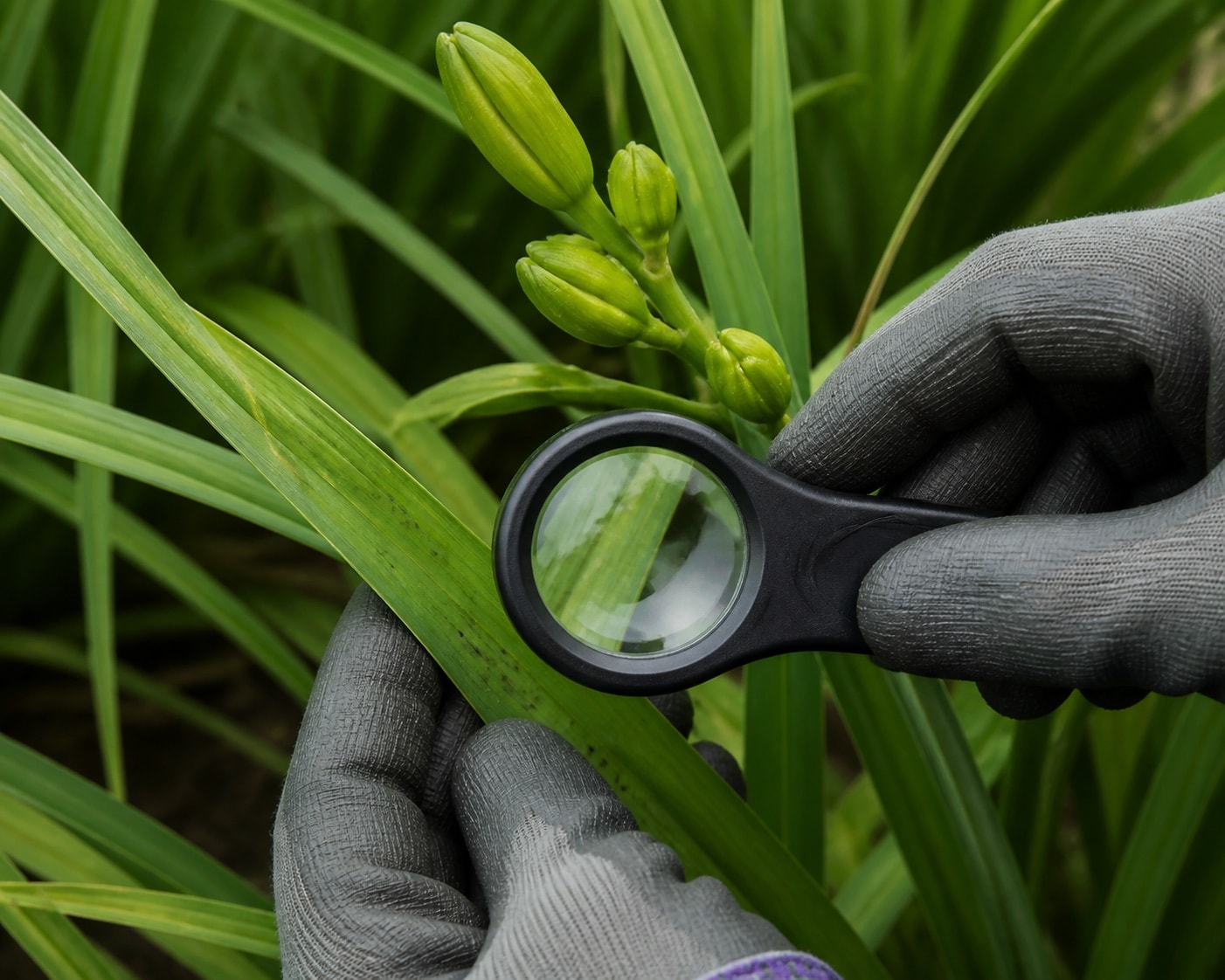
A yellow leaf, damaged bud, or weak flowering season is a symptom, not a diagnosis. Several causes can produce similar appearances, and more than one stress may be present at once. The safest useful response is to slow down, document the pattern, and work from broad conditions toward specific signs.
Step one: define what changed
Write exactly what is different and when it began. Is the entire clump affected or one fan? Are all daylilies in the bed similar, or only one cultivar? Did symptoms follow heavy rain, drought, cold, heat, division, transplanting, or a change in shade? Compare with photographs from the same point in a previous season.
Normal leaf aging usually differs from a rapidly expanding lesion or a collapse at the crown. Physical injury often has a directional pattern. Chewing removes tissue; sap feeding may distort or discolor it. Avoid naming the problem until the distribution and timeline are clear.
Step two: inspect the site
Check moisture several inches below the surface. Examine whether mulch or soil has accumulated over the crown. Look for runoff, compaction, root competition, and changes in light. Poor flowering may follow increased shade or recent division rather than disease. Repeated crown trouble often deserves a drainage investigation before any product is considered.
A broad university plant profile provides expected cultural conditions and notes common concerns. Use it to compare the site with the plant’s baseline needs.
Step three: inspect the plant closely
Look at upper and lower leaf surfaces, leaf bases, scapes, buds, and the crown. Use a hand lens if available. Photograph a typical symptom and one that is just beginning. Do not discard all affected material before preserving a sample or image that a diagnostic service may need.
Check nearby plants for the same pattern. A problem following a bed edge may point to spray drift, runoff, or mechanical damage. A scattered pattern across several species may suggest weather. A problem restricted to one recently acquired clump may warrant isolation and closer inspection.
Step four: choose the least disruptive response
Correct obvious site issues where possible: pull mulch from the crown, adjust irrigation, improve access, or reduce compaction without damaging roots. Remove clearly dead or heavily damaged material with clean tools when sanitation calls for it. Clean tools between clumps if an infectious issue is plausible.
Do not apply a pesticide without identifying a target and checking that the product is legally labeled for the site, plant, and pest. Broad treatments can harm beneficial organisms and may not address the cause. A public integrated pest management library explains identification-led approaches and nonchemical options across home landscapes.
When to seek local help
Contact a local extension office or plant diagnostic laboratory when symptoms spread rapidly, crowns collapse, a regulated pest is possible, or identification remains uncertain. Provide clear photographs, the timeline, watering and weather history, recent treatments, and information about neighboring plants. Follow sample-submission instructions rather than mailing material unannounced.
Common patterns to consider
- Few flowers: shade increase, recent division, drought, excess nitrogen, immature clump, or cultivar response.
- Yellowing foliage: seasonal aging, moisture imbalance, root stress, nutrient issue, or disease.
- Damaged buds: weather, insects, animals, or physical contact.
- Leaning scapes: cultivar habit, shade, storm damage, crowded growth, or weak establishment.
- Soft crown tissue: excessive moisture or decay; reduce disturbance and seek diagnosis.
Record the action and result in garden records. A response that is not documented cannot become reliable local knowledge.
Recheck the plant after a defined interval and photograph it from the same position. Improvement, stability, or spread are all information. If the first explanation no longer fits, revise it openly rather than adding treatments to defend an early guess.