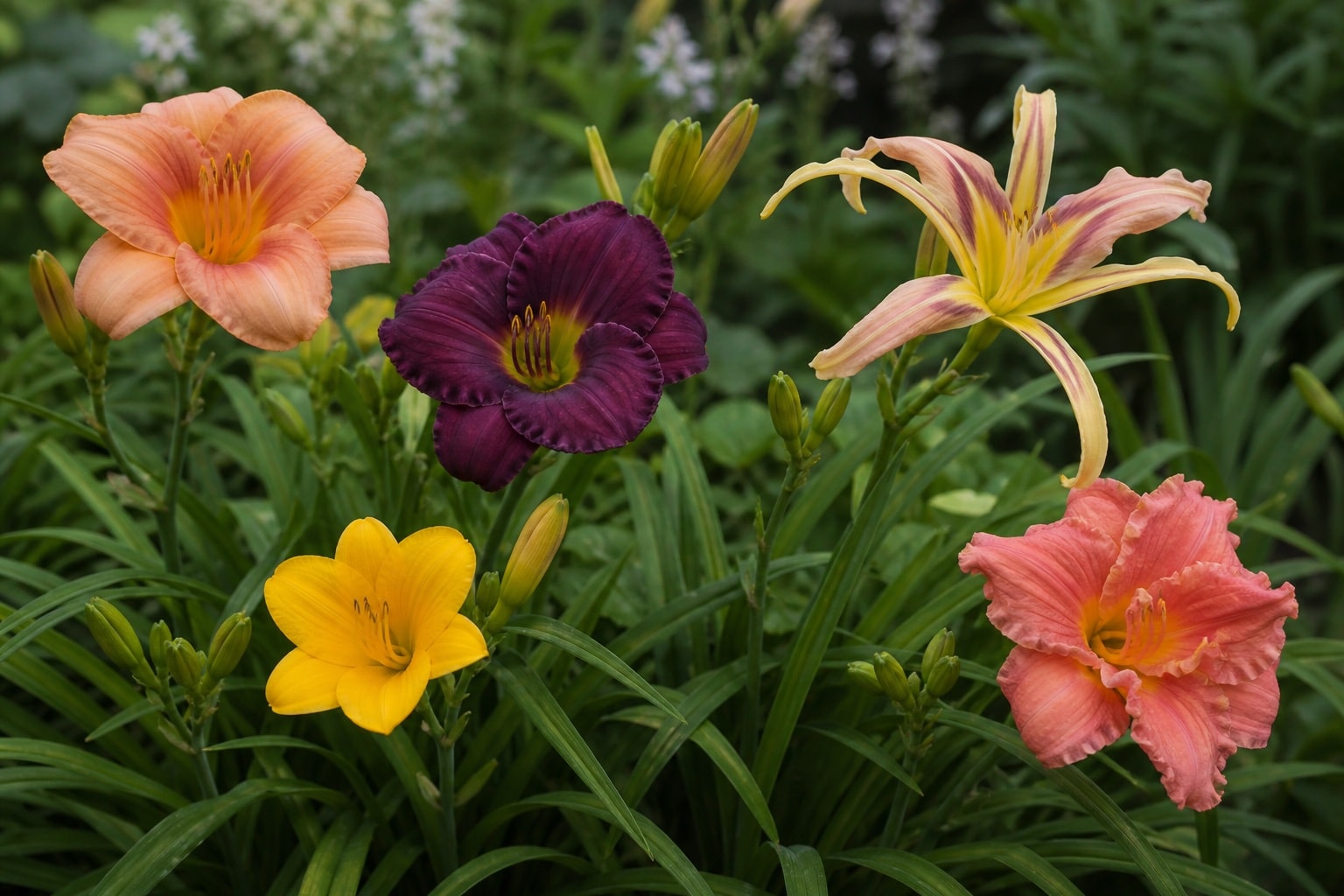
A flower photograph can begin the selection process, but it cannot finish it. A daylily lives in the garden as a clump of foliage, a sequence of scapes, and a changing presence across several months. Choosing well means connecting the flower to the plant’s structure, timing, and role in the border.
Begin with the site brief
Write a short description of the planting position before comparing names: hours of sun, soil moisture pattern, available width, preferred height, nearby colors, viewing distance, and the weeks when another bloom is needed. This turns an open-ended search into a design problem. It also prevents a beautiful but unsuitable plant from becoming a maintenance puzzle.
Daylilies generally favor sun to partial shade and well-drained soil, as summarized by this horticultural plant profile. Within that broad range, local reports are more useful when the conditions resemble yours. Ask how the entire plant performs, not whether someone simply likes the flower.
Flower traits
Color changes with light, temperature, camera settings, and background. Compare more than one image and look for descriptions of throat, eye, edge, midrib, and reverse. Note flower diameter in relation to scape height. A large bloom on a low scape has a different garden effect from the same diameter held above a tall airy clump.
Form influences the visual language of a border. Round full flowers can create strong repeated disks; narrow or unusual forms introduce movement; small flowers can read as a sparkling texture from a distance. Choose the effect that supports neighboring plants rather than collecting every form without a plan.
Plant traits
Scape height, strength, branching, and bud distribution determine how the display occupies space. Foliage width, arch, density, and post-bloom quality matter for much longer than any individual flower. Vigor should be interpreted carefully: a fast-growing clump can fill a new bed efficiently but may demand frequent division in a tight composition.
Foliage habit terms such as dormant, semi-evergreen, and evergreen describe seasonal behavior but do not function as complete climate ratings. Seek regional experience, then test the plant in your own garden. Record winter survival, spring emergence, and bloom after more than one season.
Timing and sequence
Bloom-season labels are relative. An early cultivar in one climate may overlap midseason plants elsewhere. Build a local sequence by recording first, peak, and final bloom dates. If rebloom is important, distinguish a repeated observation in similar conditions from a catalog possibility. The bloom-season notebook explains how to create a dependable calendar.
Identity and provenance
Buy or receive plants from a source that maintains clear labels and provides healthy, correctly identified material. When exchanging divisions, keep the cultivar name attached through lifting, transport, and planting. If a label is lost, do not reconstruct the identity from memory or flower color alone. Record it as unknown.
A selection scorecard without false precision
Instead of assigning a single numerical score, describe fit in five sentences:
- Site: why the light, moisture, and space suit the plant.
- Season: what gap in the local bloom calendar it fills.
- Structure: how scape and foliage contribute to the border.
- Color: which neighboring plants support the flower.
- Care: what division, labeling, or monitoring it may require.
This method makes tradeoffs visible. A plant may be perfect for season and color but too tall for the position. Another may have plain foliage but exceptional branching. The decision becomes a design choice rather than a contest.
Observe before expanding
Plant one or a small group, then watch for two or three seasons before repeating it widely. Use the records system to capture dates and plant habit. Garden performance is local knowledge, built slowly and worth preserving.