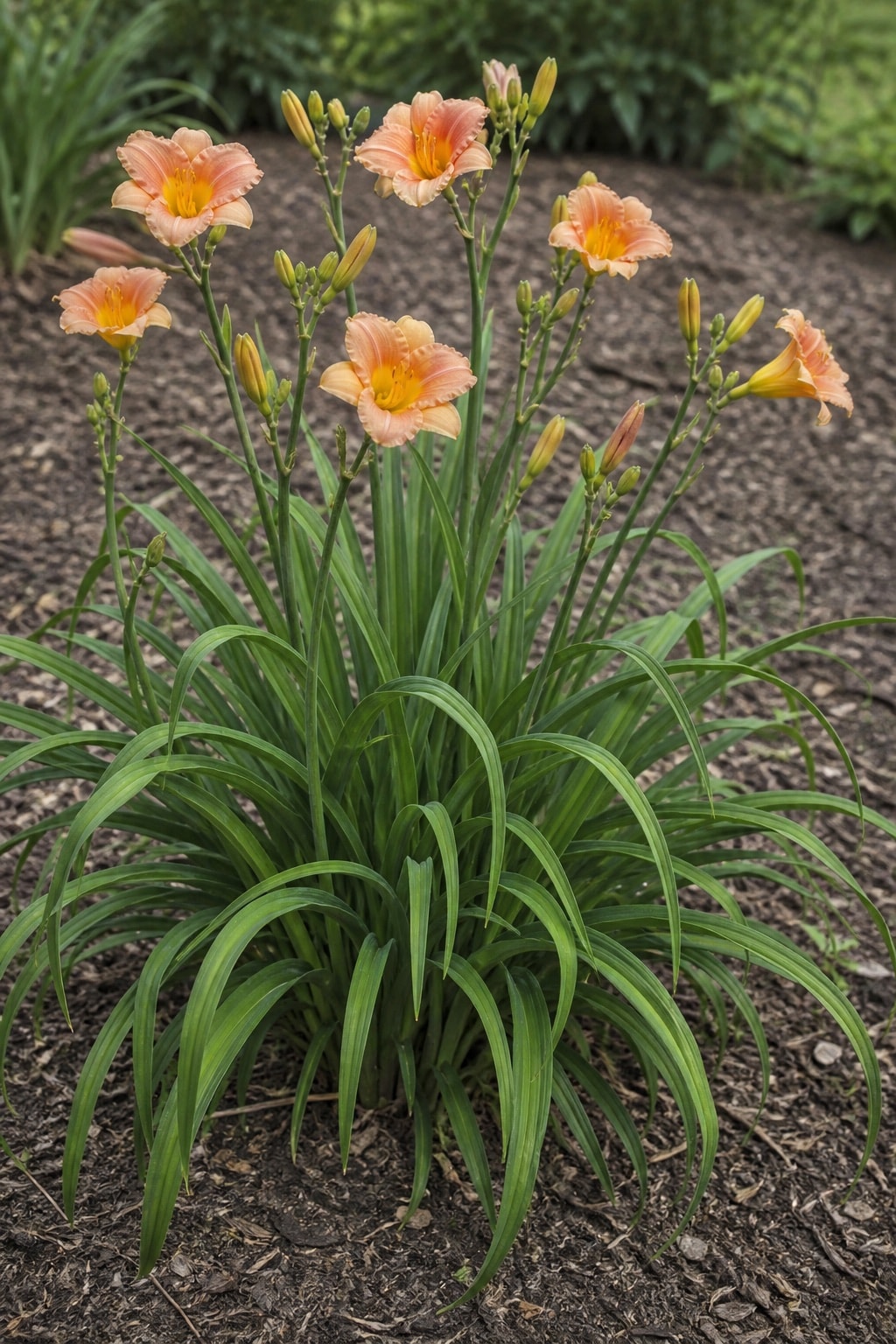
Daylilies belong to the genus Hemerocallis. Despite the common name, they are not true lilies. They form perennial clumps of arching, straplike leaves, with flowers carried above the foliage on leafless stalks called scapes. Understanding this structure helps a gardener distinguish normal seasonal change from a genuine problem and compare cultivars on more than color alone.
Fans, crowns, roots, and scapes
A fan is a unit of foliage arising from a crown. Mature clumps contain multiple fans connected by a root system that includes both fibrous and thickened roots. New growth emerges near the crown, so planting depth and drainage matter: a crown buried too deeply or held in persistently saturated soil may struggle. The university plant profile for Hemerocallis summarizes the genus, preferred conditions, and propagation by division.
Scapes rise from the foliage and carry buds. Their height affects where a plant belongs in a border. Their strength affects whether flowers remain upright after wind or rain. A scape may branch, creating multiple points at which buds are carried. Bud count and branching influence the duration and density of the display, but weather and establishment also affect what a plant expresses in any given year.
Why each flower is only part of the story
A daylily bloom is typically short-lived, often opening for one day. The plant compensates by producing a sequence of buds. Some flowers open in the morning; others begin later. Some cultivars may reopen or hold their form longer in favorable conditions. Rather than judge a clump by one perfect blossom, watch the succession: how many days does it carry open flowers, how cleanly do spent blooms release, and how does the plant look between peaks?
Flower descriptions commonly refer to form, size, throat color, eye zones, edges, ruffles, and patterns. Those terms are useful, but garden performance adds another layer. A modest flower on a strong, well-branched plant can contribute more to a border than a spectacular bloom carried sparsely or hidden in foliage.
Foliage habits and seasonal behavior
Daylilies are often described as dormant, semi-evergreen, or evergreen. These categories describe foliage behavior, not a simple guarantee of cold hardiness. Local winters, snow cover, freeze-thaw cycles, and the plant’s genetics all influence what a gardener sees. Record whether foliage disappears, remains partly green, or resumes growth early. Avoid turning a single winter into a permanent verdict.
After bloom, healthy foliage continues supporting the crown. Removing sound green leaves merely for neatness reduces photosynthetic area. Remove damaged or fully dead material as needed, but let useful foliage do its work. In autumn or after frost, cleanup choices can be adjusted to the local climate and the garden’s disease history.
Species, hybrids, and named cultivars
The genus includes species, while modern garden daylilies are often complex hybrids selected for particular flower and plant traits. A named cultivar should be a consistent clone propagated vegetatively. Seedlings may be interesting, but they do not reproduce a named cultivar exactly. This distinction matters when labeling, sharing divisions, or building records.
For selection, combine four kinds of information: reliable identity, observed performance in comparable conditions, the plant’s role in your design, and your willingness to maintain it. The cultivar guide turns those factors into a worksheet. The record-keeping page helps protect names and notes through division and relocation.
A five-minute clump reading
- Count visible fans without pulling the crown apart.
- Look for firm growth at the center and check whether water collects there.
- Compare scape height with foliage height.
- Note branching, bud distribution, and any leaning.
- Observe leaf color, spots, streaking, chewing, and weather damage.
- Record first bloom, peak bloom, and last bloom dates.
This quick reading turns a flower into a plant profile. Repeat it across the season and the daylily becomes easier to place, care for, and evaluate.